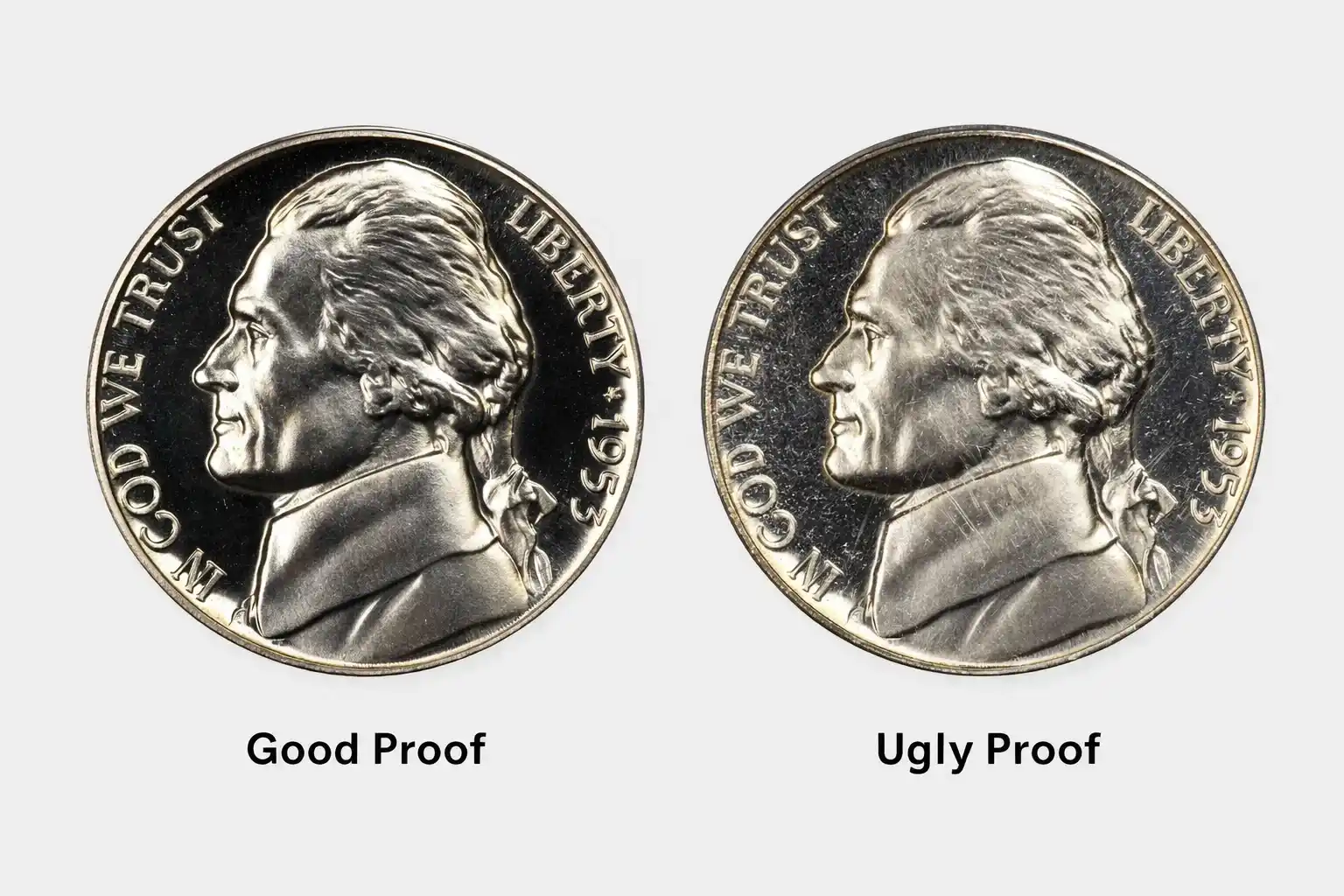
In the science of old money, people put errors into groups based on the time of making them, including the preparing of metal pieces, the making of the stamps, and the hitting of the metal.
Most of our attention stays on the groups of error nickels worth money list having a very high price because they are very rare and important for the history of the US Mint.

How Stamp Errors Happen And Their Groups
Stamp errors start happening when workers make the tool for hitting thousands of coins. The most expensive errors are the result of breaking the rules of copying the main master tool.
Doubled Die Coins
This error starts when the working stamp gets two or more moved hits from the master tool. This problem makes the design look double on all coins made by this tool.
It is very important to see the difference between a real Doubled Die and a “machine doubling” error.
Machine doubling happens because of the tool shaking at the moment of hitting the metal and people do not think it is a rare error.
Having a real Doubled Die error, the doubling stays on the tool itself.
The most famous example is the 1955 Jefferson Nickel Doubled Die Obverse.
Even if this coin is less known than the cent of the same year, it has a very big price.
Good signs of this error include clear double letters in the words “IN GOD WE TRUST” and the word “LIBERTY”.
Looking at these coins, experts check the space between the lines of the letters. Having a bigger space and clear lines, the coin gets a higher class in the list of money value.
Putting A New Date Or Mark Over An Old One
In old times, people worked with their hands more often and they made mistakes putting one symbol over another.
- 1918/7-D Buffalo Nickel: This coin is the result of using a stamp having the number 8 put over the number 7. This happened because the workers in Denver did not have enough new stamps at the end of the year. Looking closely at the coin, you can see the lines of the seven under the eight. The price of these coins staying in a very clean condition is many thousands of dollars.
- 1943-P 3 over 2 Jefferson Nickel: During the Second World War, people made nickels using 35% silver and workers made a mistake putting the number 3 over the number 2. This is a classic example of using an old tool again.
Mule Coins
Mule errors happen when people use stamps from different coins or different designs for making one coin. In the five cent group, this is very rare. For example, using the front side from one year and the back side from another year after a design change creates this coin.
Errors Happening During The Hitting Process
These errors are different from stamp errors because they happen by chance to one coin at the moment of hitting.
Off-Center Strike
This error happens when the metal piece goes into the machine only halfway. As a result, the picture stays only on one part of the coin and the other part stays flat.
To find the price of this error, people use these rules:
- The percent of moving: A moving from 35% to 65% is the best.
- Having the date: Coins without a date have a much lower price. If the date stays on the coin with a big move, the price goes up.
- The look: Having scratches on the flat part makes the coin less expensive.
Double Strike
If the machine hits the coin and the coin does not go out but stays for a second hit, we get a double picture. If the coin moves for the second hit, we call it a “Double Strike Off-Center”. These coins are very hard to study because experts must find the order of the hits and the place of the coin in the machine.
Hitting On The Wrong Metal Piece
This is one of the most expensive groups of errors. It happens when a metal piece for a different coin falls into the box for nickel pieces.
- Nickel on a cent piece: The coin has a red color, a smaller size, and a weight of about 3.1 grams. The picture of Jefferson often looks cut because the cent piece is small.
- Nickel on a dime piece: This is a piece made of copper and nickel weighing 2.268 grams. These errors cost thousands of dollars because the small piece often breaks the machine.
Brockage
A brockage error happens when a coin stays on the stamp and hits the next metal piece like a tool. As a result, the new coin has a normal picture on one side and a mirror picture on the other side. A deep mirror brockage is a very rare thing for collectors.

Problems With The Metal Pieces
Errors can happen even before the hitting because of bad metal or bad cutting.
Lamination Cracks
For nickels, especially the “war nickels” from 1942 to 1945, having metal skin problems is very common. Because of adding manganese and silver, the metal became easy to break. As a result, the coin surface has lines or missing pieces. Even if small lines do not cost much, big missing pieces with a clear date have a high price.
Clipped Planchet
If the machine cuts the metal discs from a long metal sheet and the sheet moves the wrong way, the cutter can hit a place with a hole already there. We get a coin with a missing part. On real “clipped” nickels, you must see the “Blakesley Effect” making the edge of the coin look flat on the other side from the cut.
Rare Coins Of The Buffalo Group (1913–1938)
The Buffalo Nickel group has some special errors because the design was very hard to make.
The Three-Legged Buffalo (1937-D)
This is not a hitting error but a result of a worker cleaning a broken stamp too much. A worker in Denver wanted to take away marks of stamps hitting each other and he accidentally cleaned away one front leg of the buffalo. Rules for a real coin:
- The back leg of the buffalo is good.
- Under the body, you can see metal lines looking like water.
- The front side does not have bad marks in the same place. The price of this coin can be more than 20,000 dollars.
Two Feathers Variety
Just like the other case, because of cleaning the stamp too much, the small third feather in the Indian’s hair went away. This variety happens in different years but it is most rare in some combinations of cities.
War Nickels 1942–1945
Changing the metal to 35% silver made some special errors.
No P Nickel
All silver nickels must have a big letter P, D, or S over the building. If a 1942 coin does not have the letter, it means it was made on an old metal piece or the stamp was bad. But some people take away the letter to lie to collectors. Checking the weight and the metal is very important.
How People Check And Price Coins
To be sure a coin is real and has a good price, people use special companies like PCGS or NGC, or a free coin value checker.
Grading
The look of the coin on a scale from 1 to 70 changes the price directly. For example, a 1964 Jefferson Nickel with a 50% move in AU-58 condition can cost 150 dollars, but a coin in MS-66 condition can cost 1,000 dollars or more.
Finding Fake Coins
There is a big business of making fake errors. The main ways of lying are:
- Making a fake Off-Center: Cutting the edges of the coin with tools.
- Making a fake Brockage: Pressing two coins together in a heavy tool. This makes a flat picture that an expert can see easily.
- Using acid: Making the metal look like it is breaking.
Money Value And The Market
The market for rare nickel errors moves up and down but the price for special coins always stays high.
Why Prices Go Up
- The look: How interesting the error looks.
- The group: Errors on Buffalo Nickels cost more than on modern Jefferson Nickels because they look better.
- Being unique: Having the coin in the lists of big auction houses like Heritage.
Big Sales
Coins having two or more errors together, like a nickel hit on a cent piece with a 25% move, are very rare and they can cost from 5,000 to 15,000 dollars.
Advice For Finding And Keeping Coins
To find rare errors, you need a microscope with a 10x to 40x zoom, good scales, and a coin checker app.
Keeping Coins Safe
Coins with errors, especially having open metal inside, can get bad very fast. It is better to use special plastic holders. Touching the coins with your hands is very bad because the oil from your fingers leaves marks that stay forever and make the price lower.